

If you want to know how to speed up wisdom teeth recovery, it's all about not doing things that will slow it down. It comes down to protecting the blood clot that fills the socket for the first two weeks, and keeping the swelling down for the first three days. There are also a few things that your surgeon can do to help speed up your recovery.
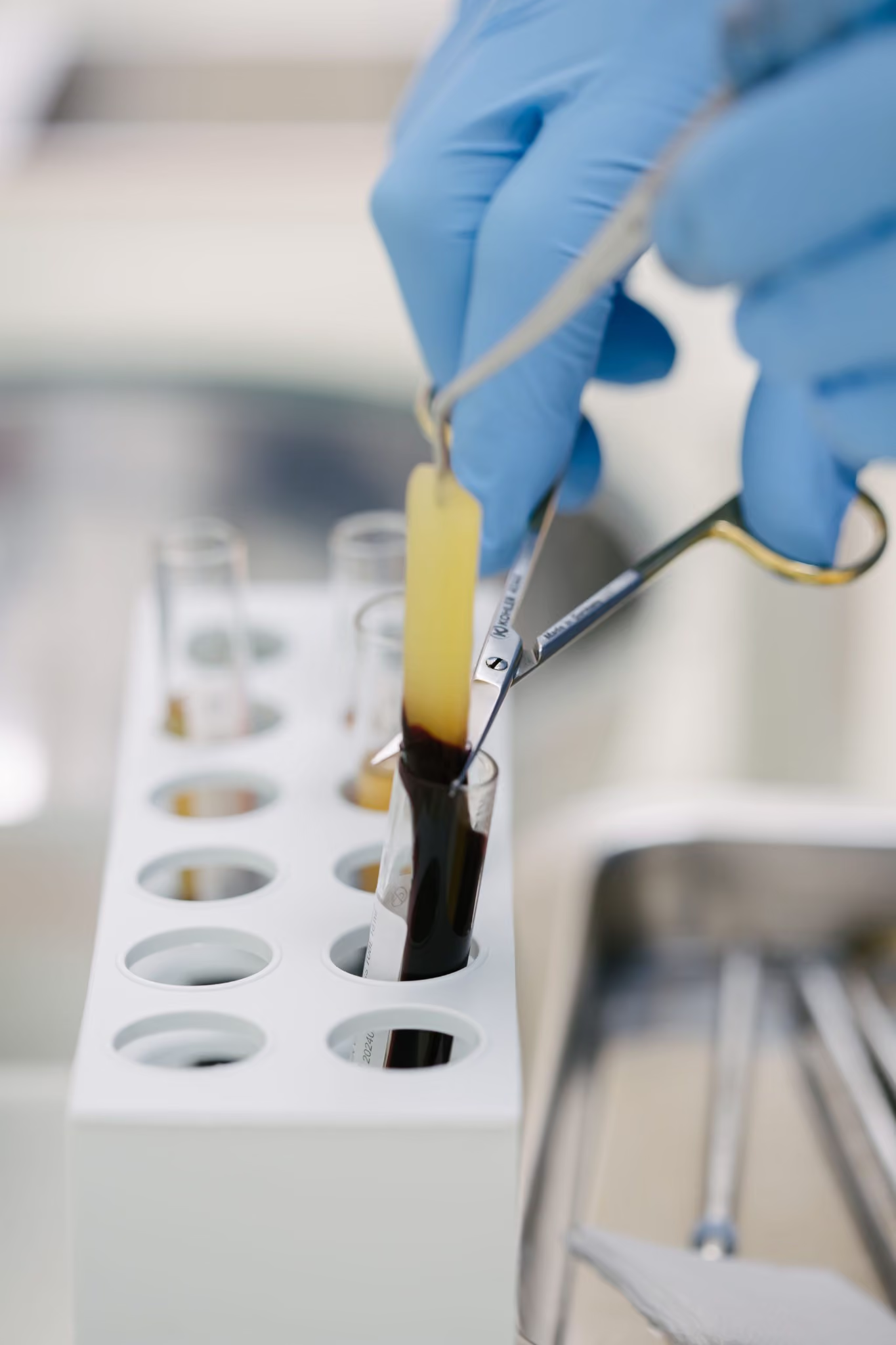
At Seda Oral Surgery in Manhattan, Dr. Justin Seda uses platelet-rich fibrin (PRF) to help with recovery. PRF is a small “super clot” that is made from a concentrate of your own blood, and placed in your socket during surgery. Not only does the research support the use of PRF, Dr. Seda has seen success with his own patients: easier recoveries, with less pain, less swelling, and close to zero dry sockets.
If you want a day-by-day description of your recovery, please read our wisdom teeth removal recovery timeline.
What Slows Wisdom Teeth Recovery Down?
There are three things that slow down your recovery from wisdom teeth removal. They are loss of the blood clot, swelling, and irritation or infection at the surgical site. Most wisdom teeth removal recovery tips that you'll read are focused on one of these three things.
The blood clot is the most important part of speeding up your recovery. If the blood clot that forms in the socket where your wisdom tooth was removed is lost, breaks up, or doesn't form, then the bone and nerve endings underneath it are exposed, and you can get a condition called dry socket. Dry socket usually sets in two to four days after surgery and is very painful. Here is our guide on how to prevent dry socket.
How to Speed Up Wisdom Teeth Recovery at Home
At home, it's about resting with your head up, icing, taking your medication, and protecting that blood clot for two weeks.
How to Recover from Wisdom Teeth Removal Fast
- Rest with your head up for the first 24 hours after surgery. This will help with bleeding and pain.
- Ice your cheek for 20 minutes on and 20 minutes off for the first 24 hours. That's what the Cleveland Clinic recommends. After 24 hours, switch to moist heat, such as a warm towel.
- Take your medications as recommended on the bottle or as recommended by your surgeon.
- Don't disrupt the blood clot for at least two weeks. This means no drinking out of a straw, spitting forcefully, smoking, vaping, or nicotine pouches. The suction from these things can dislodge the blood clot as well as the nicotine that can cause constriction of blood vessels that leads to impaired healing.
- Rinse your mouth gently with warm salt water, but wait until 24 hours after surgery to start. Rinse every two hours and after every meal for the first week.
- Eat soft foods and drink plenty of water. Here's a list of what to eat after wisdom teeth removal.
- Don't work out hard for the first week or so. Working out hard increases your blood pressure, and that can also dislodge the blood clot.
How to Reduce Swelling After Wisdom Teeth Removal
The best way to bring swelling down is to ice for the first 24 hours and to rest with your head propped up with extra pillows, as Dr. Seda recommends. Swelling usually peaks on days two and three, and starts to go down on day four.
Call your surgeon if the swelling gets worse after day three, or if you get a fever, pus from the surgical site, bleeding that won't stop, severe pain that doesn't respond to medication, or difficulty breathing or swallowing. Call 911 if you have trouble breathing.
How to Make Wisdom Teeth Swelling Go Down Overnight
Unfortunately, swelling isn't something you can make go away overnight. It takes two to three days to develop, and it takes a few more days to go back down. The best you can do is keep up with the steps above. Your surgeon may prescribe or administer high strength anti-inflammatory medications called steroids.
What Your Surgeon Can Do to Help: PRF for Wisdom Teeth Recovery
PRF, or platelet-rich fibrin, is a small blood clot that your oral surgeon can place in the socket after your wisdom teeth are removed.
In our office, we take a small sample of your blood and put it in a centrifuge. Nothing is added to your blood. The centrifuge spins it, and as it spins it clots into a soft plug of fibrin, which contains platelets and white blood cells that release healing growth factors. If you have IV sedation, we'll take the blood from the IV so that there's no additional needle stick. When Dr. Seda removes your wisdom tooth, he'll place this plug into the socket.
How Does PRF Help Healing?
A normal socket heals on its own by forming a blood clot, which then has to stay in place. When we add PRF to the socket, we are adding a preformed fibrin clot that is rich in platelets. These platelets release growth factors at the site, and the idea is that this helps healing. Some call PRF a "super clot."
We use PRF for about 60% of our wisdom teeth patients. We think that adding PRF as part of your wisdom teeth removal at Seda Oral Surgery can be helpful in many cases. However, we always want you to know that many patients do great without it.
What Are Seda Oral Surgery's Results With and Without PRF?
Over the past six months, Dr. Seda has used PRF for dozens of wisdom teeth removals. Our patients who get PRF seem to be recovering in about half the time of patients who don't get it. They also have less pain, less swelling, and fewer dry sockets. These are preliminary results, as of October 2026, that we are seeing in our own practice.
They are partially backed by the published data. A meta-analysis published in 2019 looked at 10 randomized clinical trials, which included 314 patients. The authors found that the addition of PRF after surgery on lower wisdom teeth decreased the risk of developing dry socket (this looked at 3 of the 10 trials). They also found that PRF helped decrease pain on day three, and swelling on day one. PRF did not decrease stiffness of the jaw, and it did not help the gums heal faster. The authors state that most of the evidence in their review is low quality.
There are three things to keep in mind. First, our results are just based on our own patients. We have not done a clinical trial ourselves. Second, we don't randomly assign our patients to PRF or no PRF, so there may be differences between the two groups. Third, the published trials did not look at overall recovery time. They looked at pain and swelling at certain time points, and their differences were not as large or as long-lasting as what we are seeing in our own practice.
Is PRF Going to Help Me?
We think that PRF can help you, but it's not a guarantee, and it's not a replacement for the seven steps that we listed above.
PRF and Wisdom Teeth Recovery FAQs
How long does wisdom teeth pain last?
The pain is usually worst in the first two to three days, but should be mostly gone within a week. If your pain is getting worse after the first few days, then please call us, as you may have a dry socket.
When can I use a straw after wisdom teeth removal?
We recommend not using a straw for at least two weeks, or longer if your surgeon tells you to. The reason is that straws cause suction in your mouth, which can pull out your blood clot. If you want a smoothie or a shake, then just use a spoon in the meantime.
When is dry socket no longer a risk?
You're mostly out of the woods once you make it past the first week and your gums have started to grow over your sockets. At that point, your chance of getting a dry socket is very low. However, we still recommend not using straws or smoking for the full two weeks.
What is PRF in dentistry?
PRF stands for platelet-rich fibrin. It is made from your own blood that has been spun in a centrifuge, and Dr. Seda uses it in extraction sockets and other procedures to help with healing.
Is PRF necessary for wisdom teeth removal?
No, it's not. It is just an added step that we think will be helpful to many patients, especially high risk ones. When you come in for your consultation, we will let you know if we think it would be helpful in your case.
Wisdom Teeth Removal in Manhattan
Dr. Justin Seda is a board-certified oral and maxillofacial surgeon in New York City. We perform wisdom teeth removal at Seda Oral Surgery with a variety of sedation options, including nitrous oxide and IV sedation. We also use PRF for the right patients. Call us at (646) 776-2177 or schedule a consultation online. When you come in, just bring one question with you: "What will my recovery be like?" We will take the necessary imaging, and we will be able to answer that question for you.
Sources
- Xiang X, Shi P, Zhang P, Shen J, Kang J. Impact of platelet-rich fibrin on mandibular third molar surgery recovery: a systematic review and meta-analysis. BMC Oral Health. 2019;19:163. https://link.springer.com/article/10.1186/s12903-019-0824-3
- Cleveland Clinic. Wisdom Teeth Removal. https://my.clevelandclinic.org/health/treatments/22119-wisdom-teeth-removal