

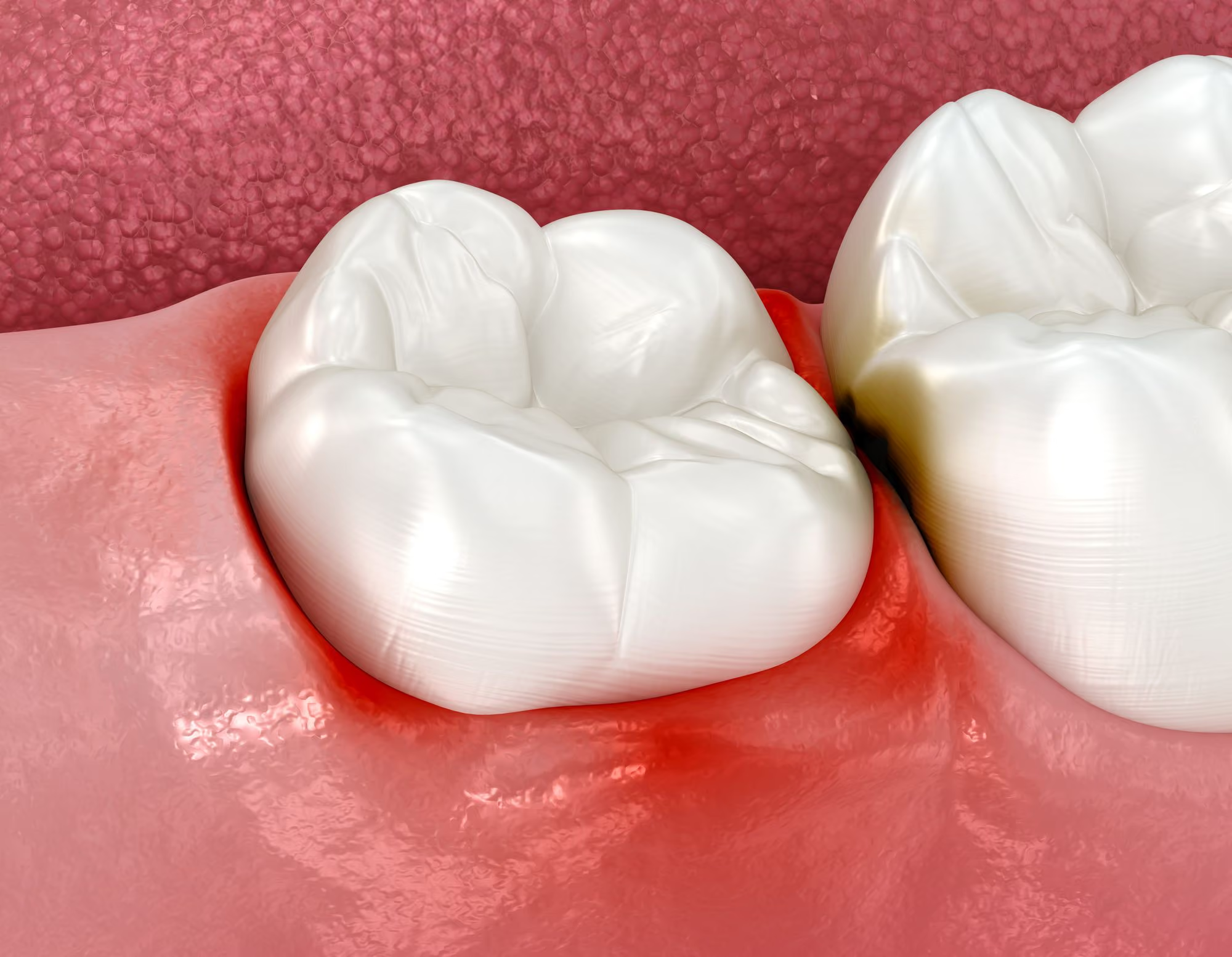
The most common symptoms of an infected wisdom tooth are pain near your back teeth, red and swollen gums, a bad taste in your mouth, pus, and fever. If you are experiencing these symptoms, you need to be seen by an oral surgeon promptly. If you are having trouble breathing or swallowing, go to the emergency room or call 911.
The table below will tell you what to do for each symptom. After the table you'll find information on how we treat infected wisdom teeth at Seda Oral Surgery in Manhattan.
Infected Wisdom Tooth Symptoms
The Cleveland Clinic lists eight symptoms of an infected wisdom tooth or, more specifically, an infection of the gum around the wisdom tooth, which is called pericoronitis. Here is the full list of wisdom tooth infection symptoms:
- Severe pain near your back teeth
- A red, swollen gum
- Pus or drainage from the infected wisdom tooth
- Fever
- Swollen lymph nodes in your neck
- Pain when you swallow
- Difficulty opening your mouth (lockjaw)
- Swelling in your face
If you're wondering what an infected wisdom tooth looks like, the gum around the wisdom tooth is typically red and swollen, and sometimes pus can be seen on the gum, which is usually partially covering the wisdom tooth. If you have swollen gums behind your wisdom teeth, you need to be seen by a dentist to check for an infection.
When Is an Infected Wisdom Tooth an Emergency?
An infected wisdom tooth is an emergency if you have any difficulty breathing, swallowing, or opening your mouth, or if the swelling has spread to your eye or neck. An infected wisdom tooth is also an emergency if you have a fever and swelling in your face and are unable to see your dentist or oral surgeon.
According to the Mayo Clinic, difficulty breathing or swallowing can be a sign that the infection has spread.
Symptoms of an Infected Wisdom Tooth and What to Do About Them
| What you're experiencing | What to do |
|---|---|
| A mild ache near your back teeth that comes and goes, bad breath, or a bad taste in your mouth | Schedule an appointment with your dentist to be examined promptly. |
| Severe pain, constant pain, a red and swollen gum, pus, fever, a swollen cheek or face, swollen glands under your jaw, or pain when swallowing | Call your dentist or oral surgeon today. |
| Any difficulty breathing, swallowing, speaking, or opening your mouth, swelling that has spread to your eye or neck, or a fever and swelling in your face when you are unable to see your dentist or oral surgeon | Go to the emergency room now. Call 911 if you're having difficulty breathing. |
The eye, neck, speaking, and mouth-opening symptoms in the bottom row were listed on the NHS's website for toothache and dental abscess.
If you're not sure if you're having pain when you swallow or difficulty swallowing, assume you have difficulty swallowing and follow the instructions in the bottom row.
If your wisdom tooth pain is unbearable and the instructions in the bottom row don't apply to you, call your dentist or oral surgeon today. You can call us at (646) 776-2177. Please call instead of using the online form on this website, this is the fastest way to get an emergency appointment.
If an infected wisdom tooth is not treated, an abscess can form and the infection can spread to your jaw, head, and neck. According to the Cleveland Clinic and the Mayo Clinic, this can be life-threatening in severe cases. The infection is also more likely to spread if you have diabetes or any condition that suppresses your immune system. Don't wait.
How to Know If a Wisdom Tooth Is Infected or Just Coming In
Severe pain, pus, a bad taste in your mouth, fever, or swelling are all signs of an infected wisdom tooth. When a wisdom tooth is just coming in, it can cause gum irritation. Sometimes this problem will go away on its own, but you'll need a dentist to make that determination.
Even if your symptoms are mild, you shouldn't assume that you can wait it out. A wisdom tooth infection can only be confirmed by a dentist after an exam, usually with an X-ray.
Early Stage Wisdom Tooth Infection: What Are the First Signs?
In the early stages, a wisdom tooth infection isn't that noticeable. The Cleveland Clinic says that pericoronitis can run a milder, longer course, with symptoms including a mild on-and-off aching pain around your back teeth, bad breath, or a bad taste in your mouth.
These first signs of wisdom tooth infection should still be evaluated by a dentist.
What Causes Wisdom Teeth to Become Infected?
Wisdom teeth become infected when they don't come all the way in, leaving a flap of gum over the back tooth. Food and bacteria get under that flap, and it causes the gum to become infected. This tends to happen more often with lower wisdom teeth.
According to the Cleveland Clinic, you're more likely to develop a wisdom tooth infection in your 20s. Additionally, if you don't take good care of your teeth, you're at a higher risk. However, it's not always preventable, even if you brush and floss.
How Is a Wisdom Tooth Infection Treated?
There are three levels of treatment for a wisdom tooth infection, according to the Cleveland Clinic. Your dentist can clean under the flap, which temporarily relieves the symptoms, perform a coronectomy, which removes the top portion of the tooth, or remove the wisdom tooth in entirety. Cleaning under the flap may include a round of antibiotics and a prescription mouthwash.
If you come to Seda Oral Surgery with an infected wisdom tooth, Dr. Justin Seda will first examine it, and then get imaging. For lower wisdom teeth, he uses 3D imaging so he can see where your nerve is located in relation to the tooth.
It may not be possible to remove your wisdom tooth the same day that you come in for an emergency appointment. Only the oral surgeon can determine what needs to be done first in your specific case. If your wisdom tooth does need to be removed, we offer sedation options in our office from nitrous oxide to IV sedation, in addition to local anesthesia. You can learn more about how we remove wisdom teeth here.
What Should You Expect When Recovering from Wisdom Tooth Removal?
When recovering from wisdom tooth removal, you'll need to keep the blood clot in the socket and keep the swelling down. About 60% of Dr. Seda's wisdom teeth removal patients get PRF, which is a blood clot made from your own blood and put in the socket to aid in recovery. You can learn more about that, and about how to speed up wisdom teeth recovery at home, here. If you want to know what to expect each day during your first week of recovery, you can read about your wisdom teeth removal timeline here.
How to Treat Swollen Gums Near a Wisdom Tooth Until You're Seen
While you're waiting to get your pericoronitis treated, there are some things you can do at home to help your symptoms, according to the Cleveland Clinic. These include rinsing with warm salt water three to four times a day, taking over-the-counter pain medication like acetaminophen or ibuprofen according to the label, and continuing to brush and floss your teeth.
These will help with your symptoms, but they won't treat the infection. Rinses and pain relievers will not change what row of the table you should be in.
Infected Wisdom Tooth: FAQs
What is pericoronitis?
Pericoronitis is the inflammation or infection of the gum around a wisdom tooth. This typically happens when the wisdom tooth has only partially erupted and food and bacteria get underneath the piece of gum still covering the wisdom tooth.
Can a wisdom tooth infection go away on its own?
You shouldn't expect a wisdom tooth infection to go away on its own. While a mild infection may go away after a few days, if the infection has turned into an abscess, it will not go away without treatment, according to the Mayo Clinic. Since you can't know the difference, you should have it looked at.
How long does a wisdom tooth infection last?
A mild wisdom tooth infection may last for a few days and a severe one may last for several weeks. Once you get treatment, it should go away in a week or two, according to the Cleveland Clinic.
Does an infected wisdom tooth need to be removed?
Not always. Some infected wisdom teeth can be treated by cleaning out the pocket under the gum flap that is causing the infection and prescribing antibiotics if needed, according to the Cleveland Clinic. However, removal of an infected wisdom tooth is recommended when it keeps causing problems. Only after an exam and imaging can we tell you which is right for you.
Can pericoronitis kill you?
In severe cases, pericoronitis can be life-threatening. This can happen when the infection doesn't get treated, turns into an abscess, and then spreads to other areas of your body, according to the Cleveland Clinic. If you are having trouble breathing or swallowing, go to the ER or call 911. If you have a fever and your face is swollen, and you can't get in to see a dentist or oral surgeon, go to the ER. However, with treatment, pericoronitis will usually go away in a week or two.
Infected Wisdom Tooth Care in Manhattan
Dr. Justin Seda is a board-certified oral and maxillofacial surgeon in New York City. If you think you have an infected wisdom tooth, schedule a visit with Seda Oral Surgery. We will examine your mouth and take imaging to determine the state of your wisdom teeth and get you the care you need. We are open from 9 AM to 6 PM Monday through Friday and have an emergency on-call service on the weekends. Call us at (646) 776-2177 to find out if your wisdom tooth is infected. If you have symptoms from the first row in the table above, request a consultation online.
Sources
- Cleveland Clinic. Pericoronitis. Medically reviewed April 20, 2026. https://my.clevelandclinic.org/health/diseases/24142-pericoronitis
- Mayo Clinic. Tooth abscess: Symptoms and causes. https://www.mayoclinic.org/diseases-conditions/tooth-abscess/symptoms-causes/syc-20350901
- NHS. Toothache. Reviewed July 1, 2024. https://www.nhs.uk/conditions/toothache/
- NHS. Dental abscess. Reviewed March 18, 2026. https://www.nhs.uk/conditions/dental-abscess/
- MedlinePlus. Ludwig angina. Reviewed January 29, 2025. https://medlineplus.gov/ency/article/001047.htm